SHIPPED
Orbital
In-house backend platform for operating and automating multi-brand casino businesses at scale.
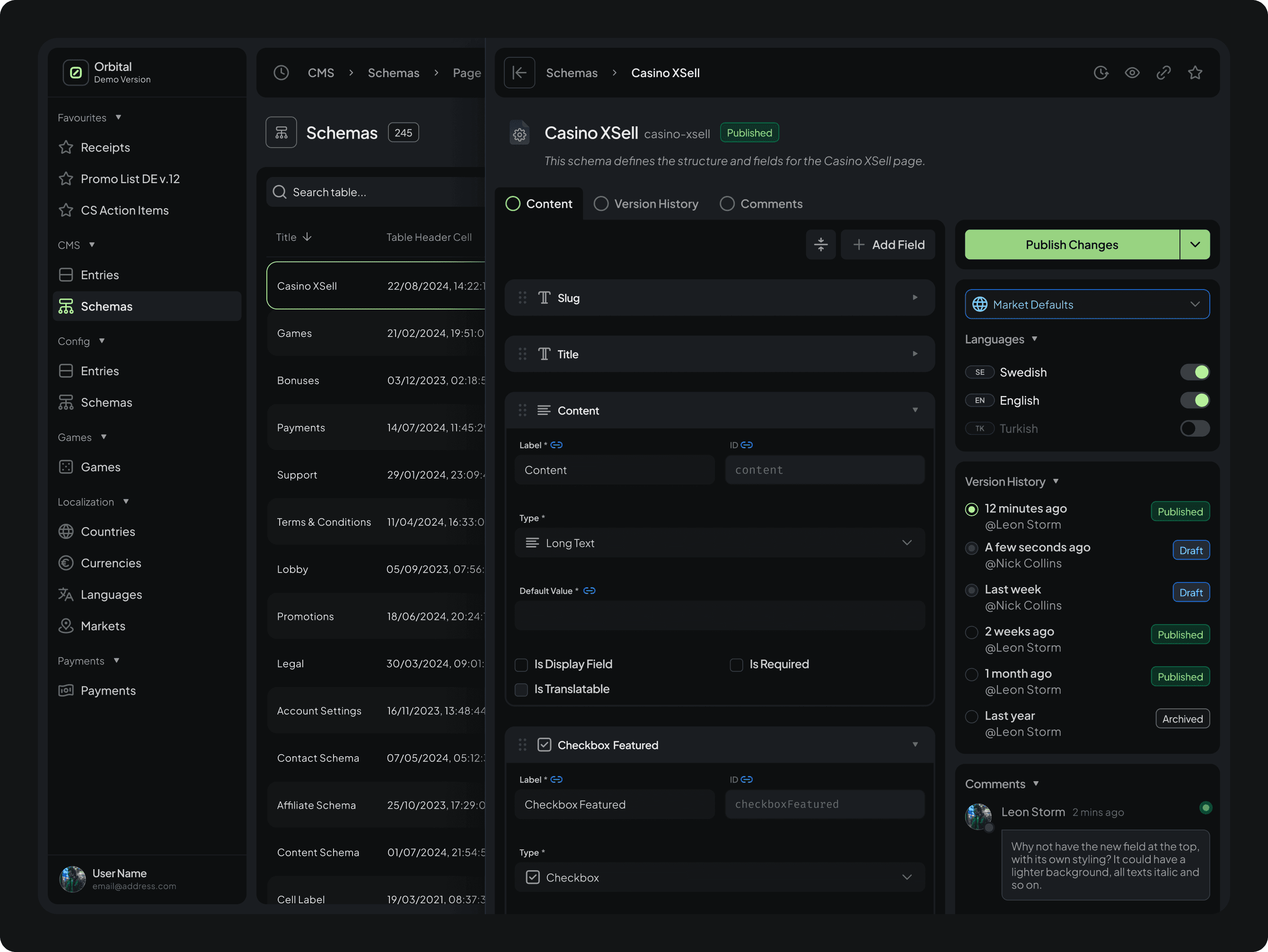
Orbital is an in-house backend platform built to run and automate complex, multi-brand casino operations, centralising users, wallets, payments, transactions, CRM, localisation, licensing, and promotional logic into a single operational core.
The system is organised around a set of core domains, including a rule engine, CMS, market configuration and localisation management, game orchestration driven by jurisdictional and regulatory rules, routing logic, user and permission management, and personalised operational dashboards.
I was the design owner for the platform, accountable for defining a scalable UX and system foundation that could support multiple brands, markets, and regulatory environments without hard-coded or market-specific implementations.
Client
Armstrong Operations
My role
Designer embedded within an engineering-led team, responsible for UX strategy, system architecture, and interaction models across the platform. Worked closely with engineers, the CTO and other product stakeholders to resolve constraints, align on data models, and ensure design decisions translated reliably into production.
Skills
Product design & UX strategy
Information architecture
Design systems & tokens (JSON / Git)
Prototyping and Interaction design
CMS & configuration tooling design
Data modelling for content, rules, and localisation
Engineering partnership through build, iteration, and release
Timeline
Q4 2023 - Q1 2026
Team
Leon Storm, Vio Cojocaru, Martin Eneqvist, Jonas Erickson, Haris Veveris, Alex Collins, Gaz Stevens, Kalman Speier, Krisztian Petrucsik, Roland Heli, Veigar Ragnheiðarson, Nils Wieslander, Oliver Fagerdahl, Markus Krefors, Jon Olsen, Linus Eriksson, Kim Hansson
Platform
Desktop Web
Challenges
Orbital needed to support a wide range of products, brands, and regulatory requirements without becoming increasingly rigid or fragile over time. The risk was not scale itself, but the accumulation of ad-hoc solutions that would undermine clarity and changeability.
The challenge was to design a system that could absorb variation without exposing complexity or increasing delivery cost.
Objectives
Design a flexible CMS and configuration foundation that balanced power with clarity.
The system needed to be:
Intuitive for non-technical users
Composable at a structural level,
Resilient to new brands, markets, and workflows.
Design decisions prioritised long-term scalability and coherence over short-term optimisation.
Approach
Design was developed directly within the frontend delivery process.
Embedded in the frontend team, I participated in daily standups and planning, working alongside engineers as features moved from concept through implementation.
We formed a dedicated design and engineering task group to align on patterns, documentation, and workflows. This included producing code-aware specifications, shared documentation, and automation-friendly design assets that reduced friction between design intent and implementation.
The approach prioritised alignment at the system level rather than handoff, ensuring design and code evolved together.
Results
Orbital was deployed internally as a modular, scalable platform capable of supporting diverse use cases without fragmentation.
Design patterns and configuration models translated consistently into production, reducing rework and enabling teams to evolve the platform with confidence as complexity increased.
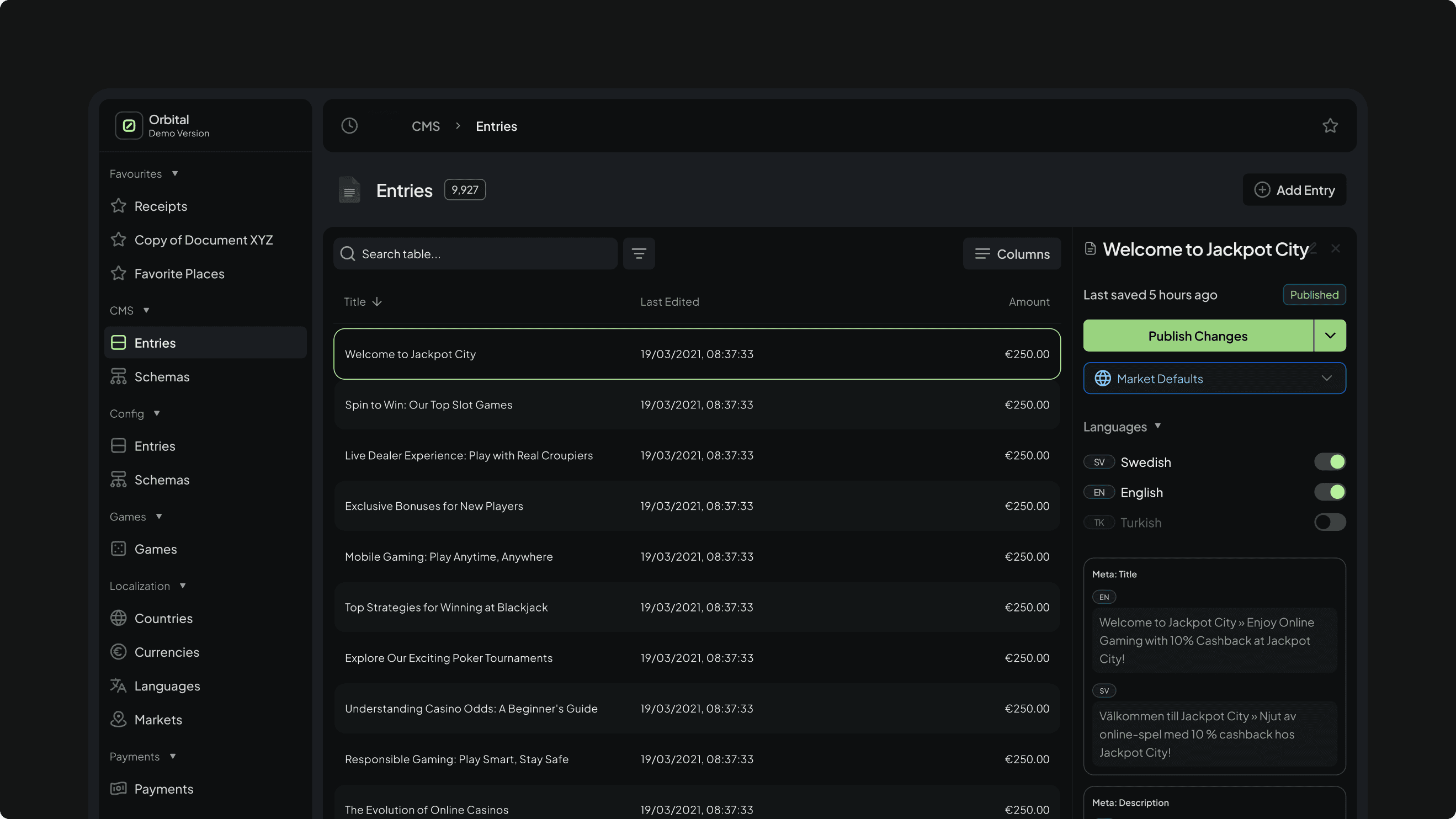
CMS entry list showing bulk content management with market defaults and inherited fields applied at scale, enabling fast localisation and controlled publishing.
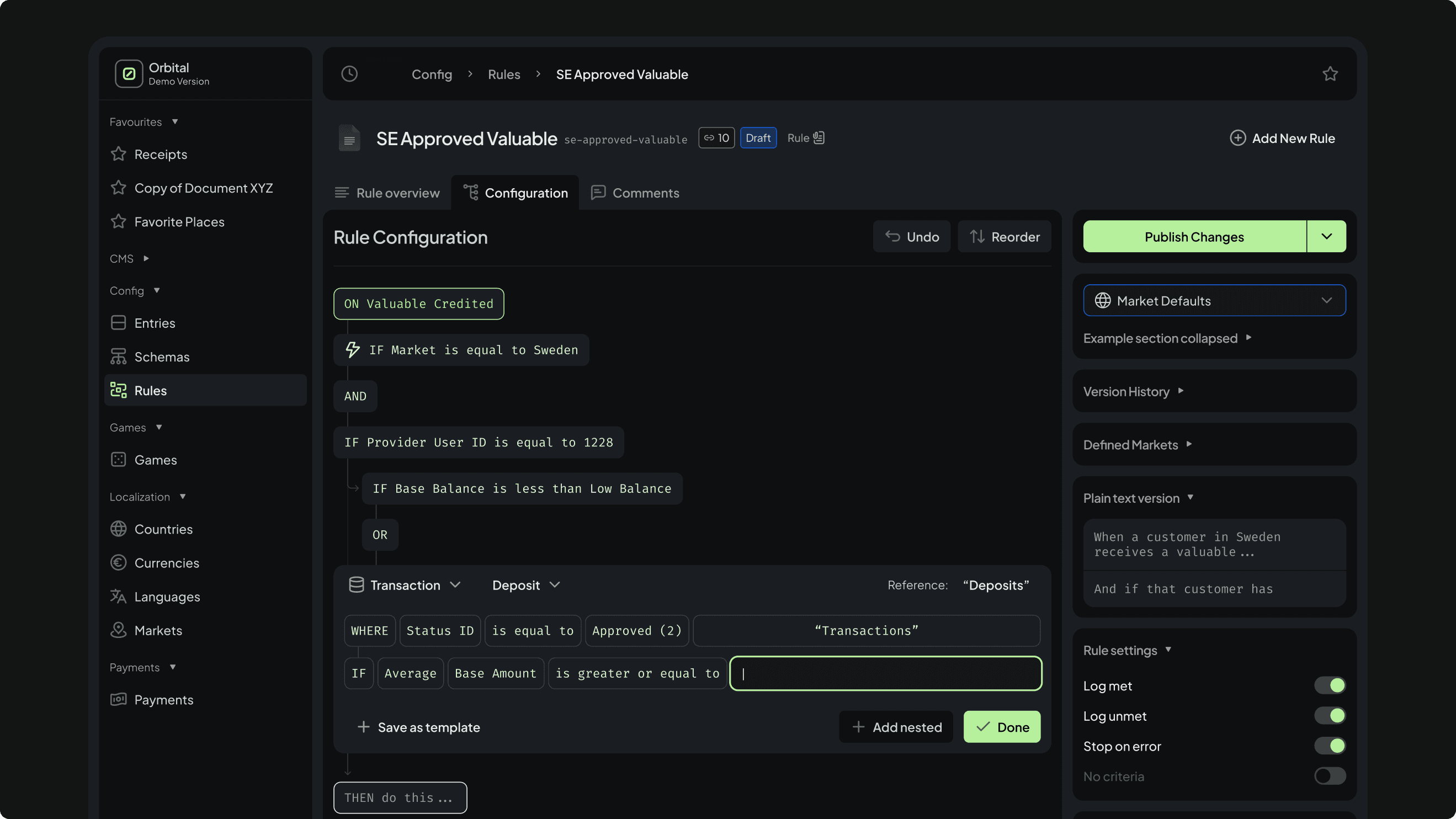
Logic-based rule builder for event triggering and audience segmentation.
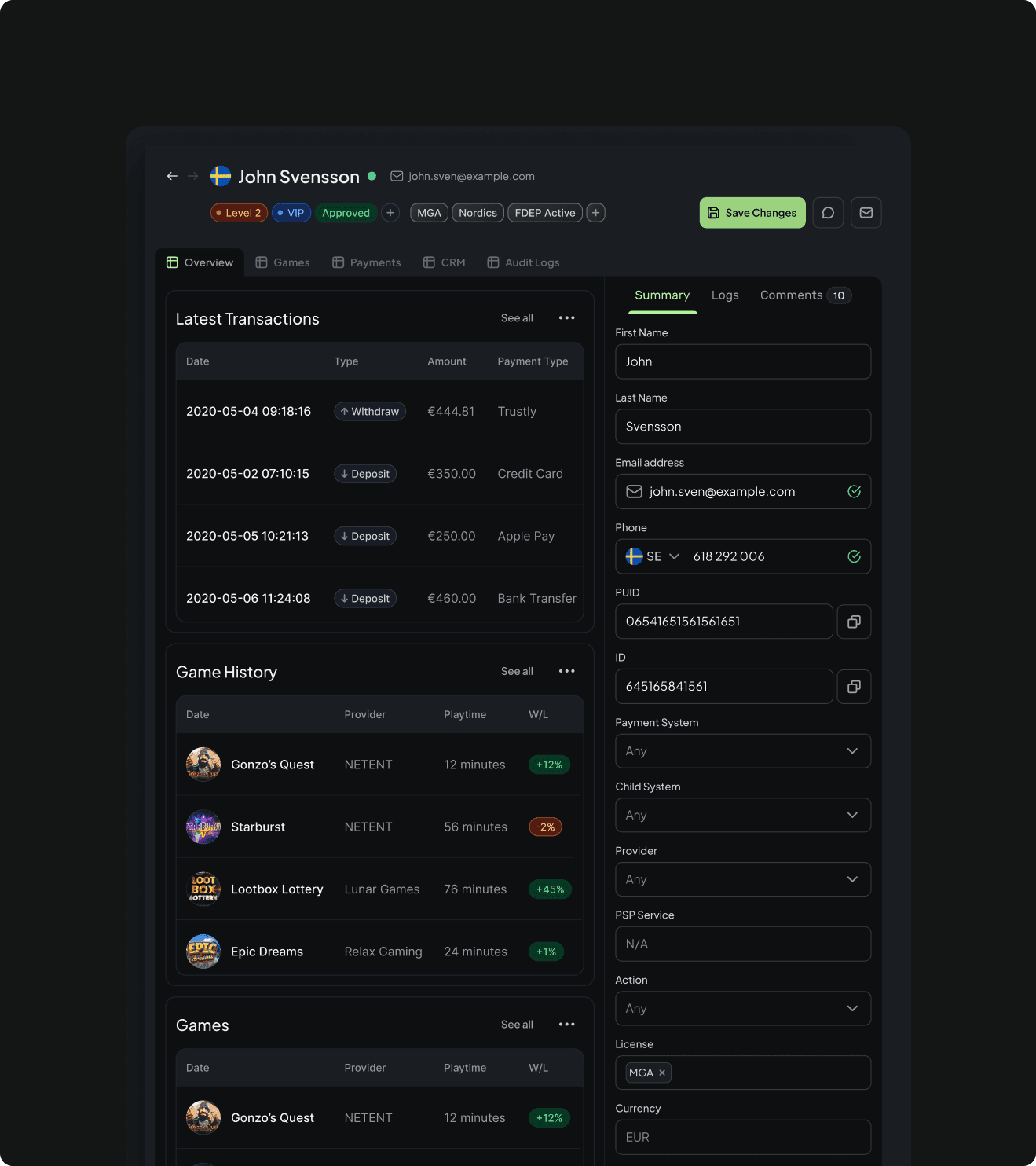
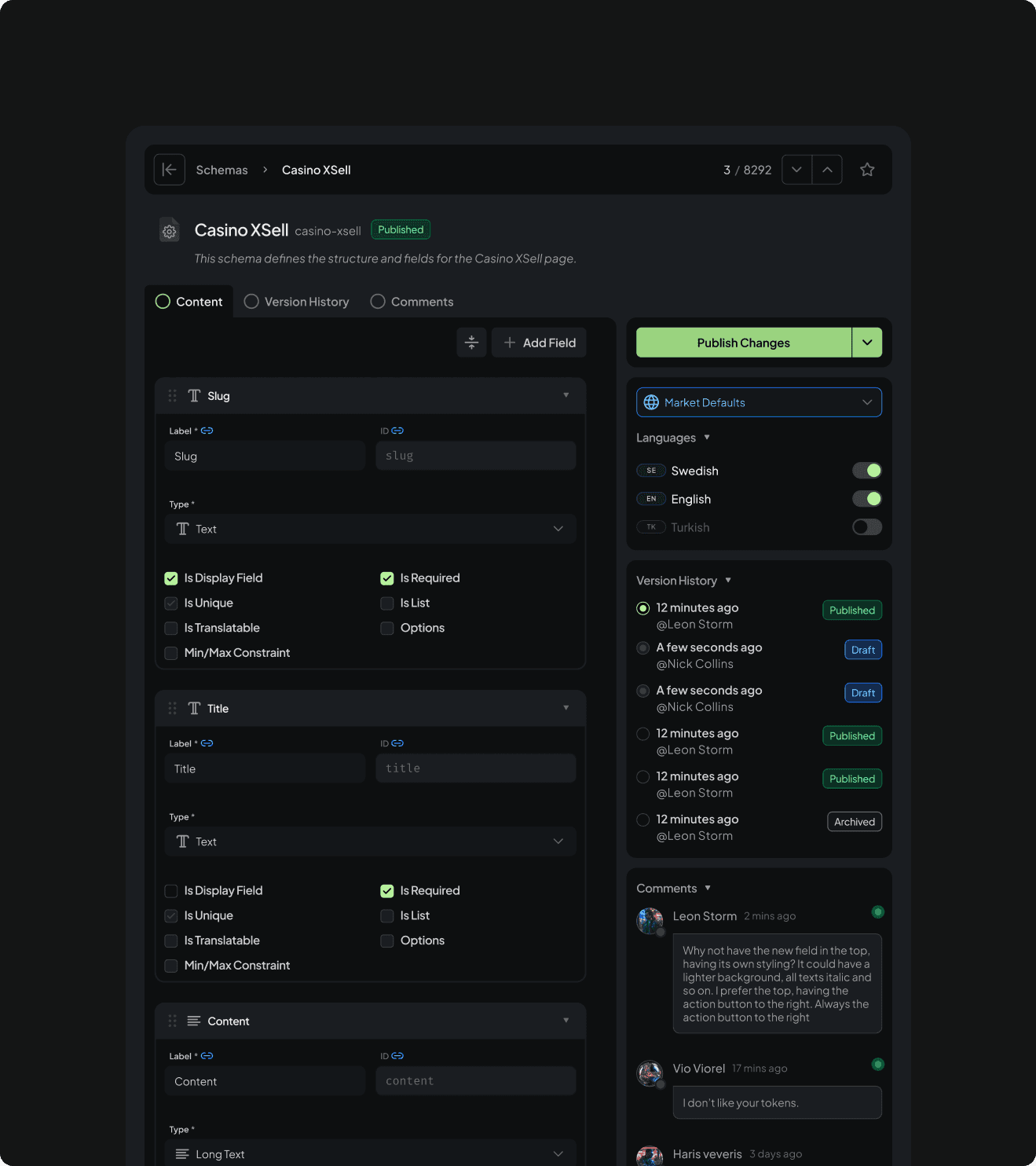
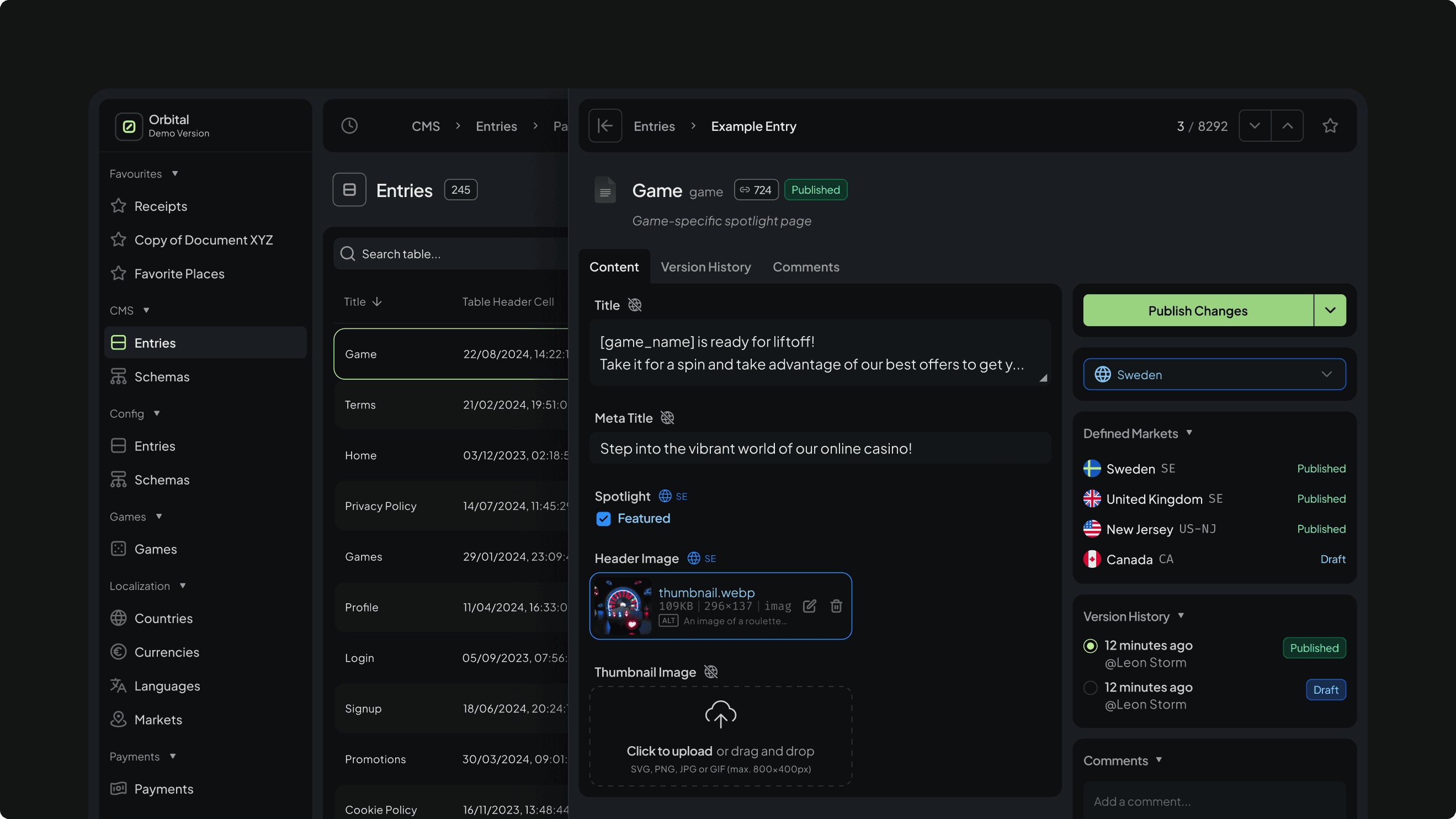
CMS entry editor showing how a single content model supports dynamic fields, SEO metadata, localisation, and market-specific publishing from one interface.
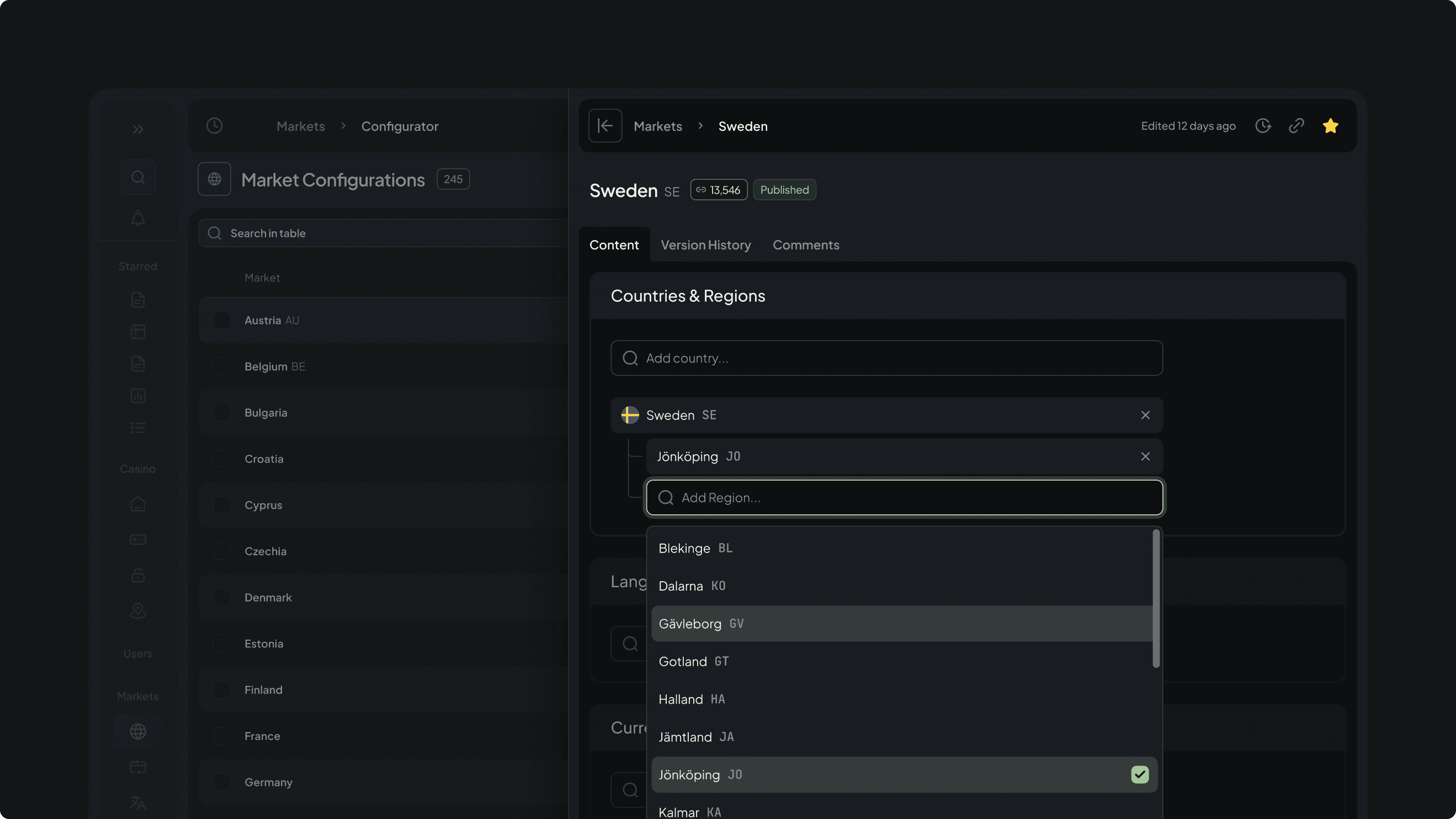
Market configuration interface for defining countries, regions, languages, and currencies, with inherited fields cascading across entries to ensure consistent localisation and behaviour.
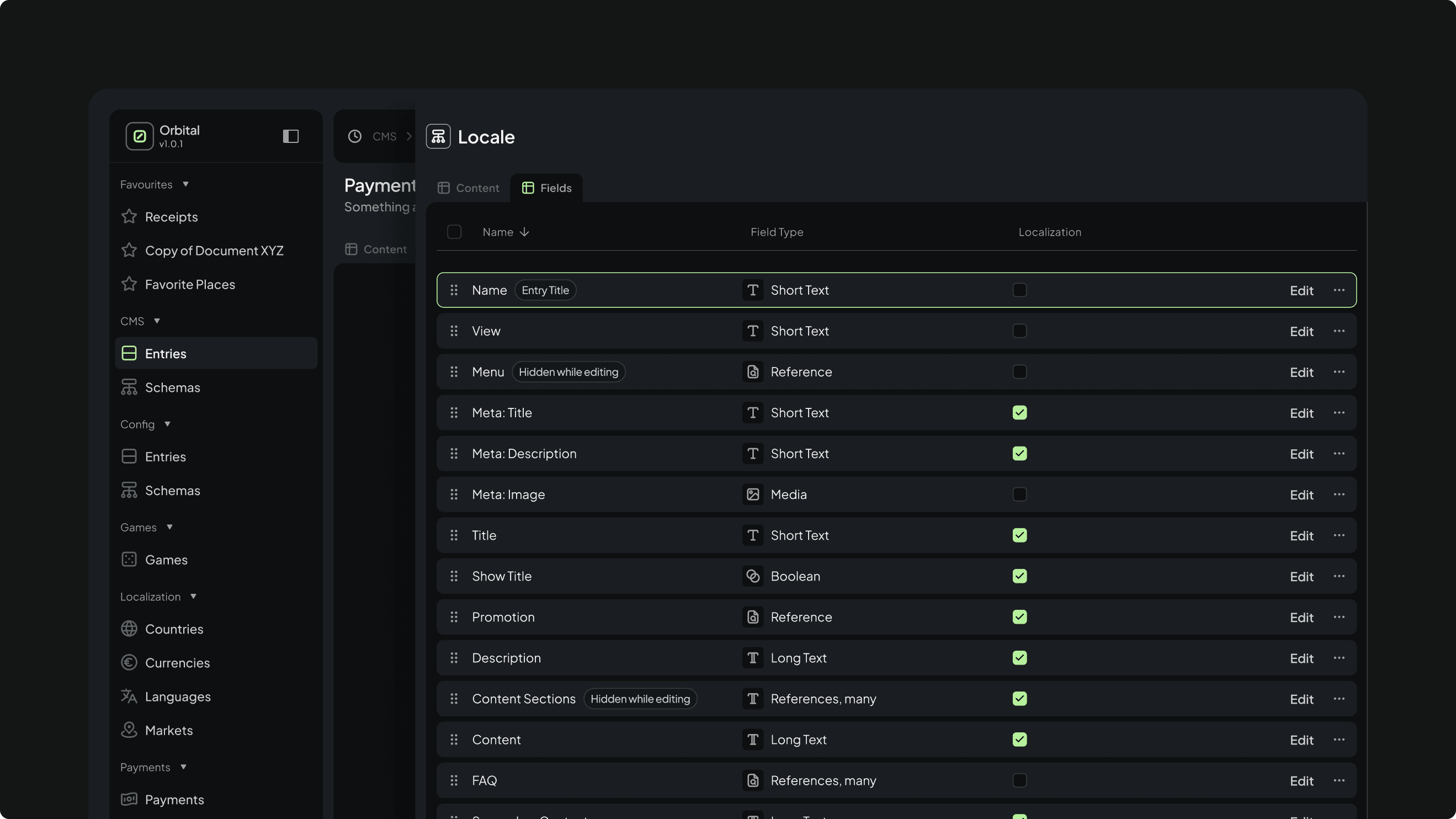

CMS field editor view.