SHIPPED
Orbital Rule Engine
Backlend platform for making complex, multi-brand casino operations easier to manage, change, and scale.
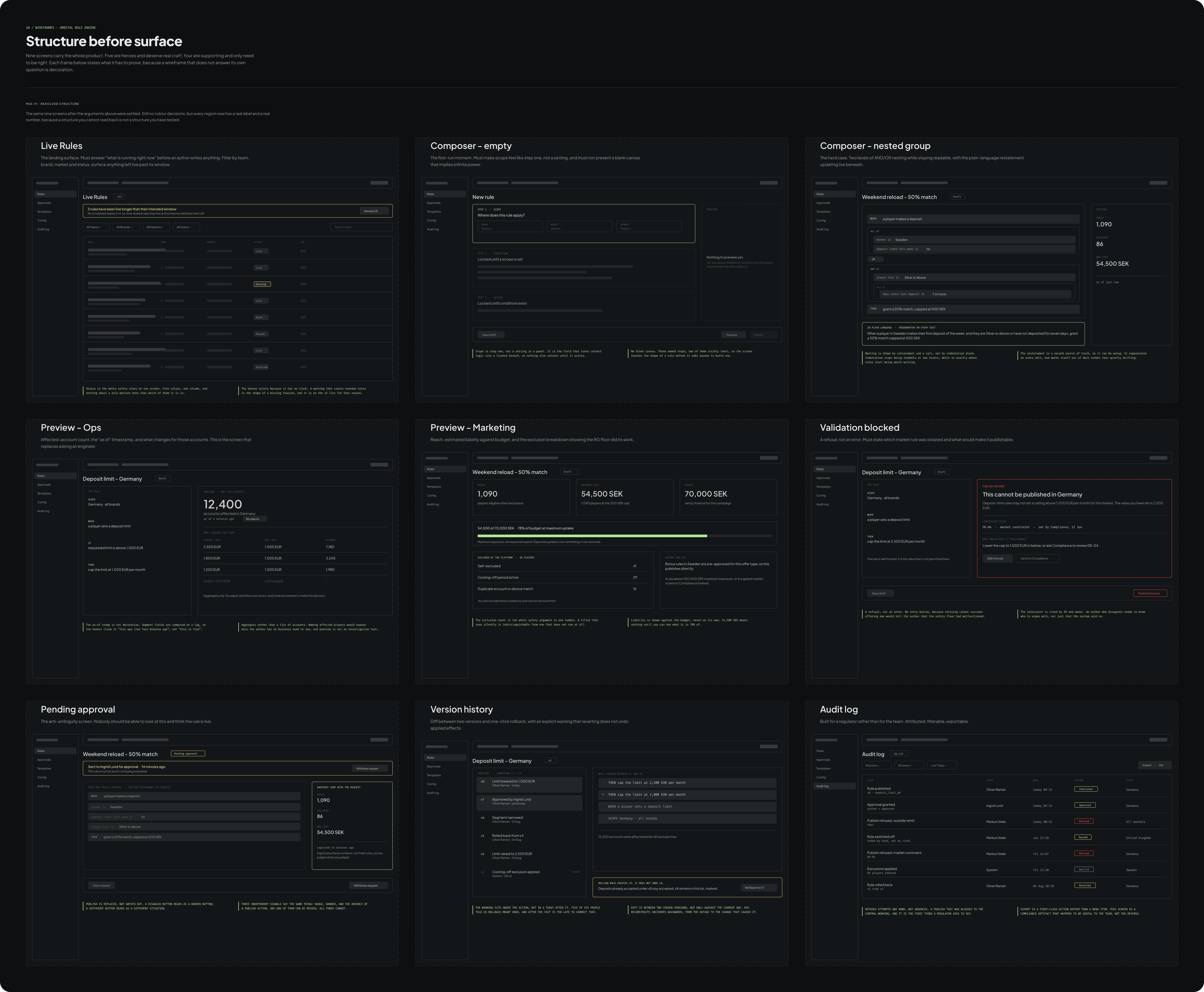
Orbital is an in-house backend platform for operating and automating complex, multi-brand casino businesses. This case study focuses on its Rule Engine: a system for managing business rules across brands, products, markets, and regulatory environments.
The challenge was that the people who owned the rules could not change them directly. Changes depended on engineering work and deployments, creating slower corrections and fragmented implementations. As the embedded designer, I shaped the UX strategy, information architecture, interaction models, and system foundations needed to make rules and configuration more composable and resilient.
Client
Armstrong Operations
My role
Designer embedded within an engineering-led team, responsible for UX strategy, system architecture, interaction design, and the design foundations that supported implementation across Orbital.
Skills
Product design and UX strategy
Information architecture
Design systems and tokens — JSON / Git
Prototyping and interaction design
CMS and configuration tooling
Data modelling for content, rules, and localisation
Engineering partnership through design, iteration, and release
Timeline
Q4 2023 - Q1 2025





Challenges
Orbital needed to support a wide range of products, brands, and regulatory requirements without becoming increasingly rigid or fragile over time. The risk was not scale itself, but the accumulation of ad-hoc solutions that would undermine clarity and changeability.
The challenge was to design a system that could absorb variation without exposing complexity or increasing delivery cost.
Objectives
Design a flexible CMS and configuration foundation that balanced power with clarity.
The system needed to be:
Intuitive for non-technical users
Composable at a structural level,
Resilient to new brands, markets, and workflows.
Design decisions prioritised long-term scalability and coherence over short-term optimisation.
Approach
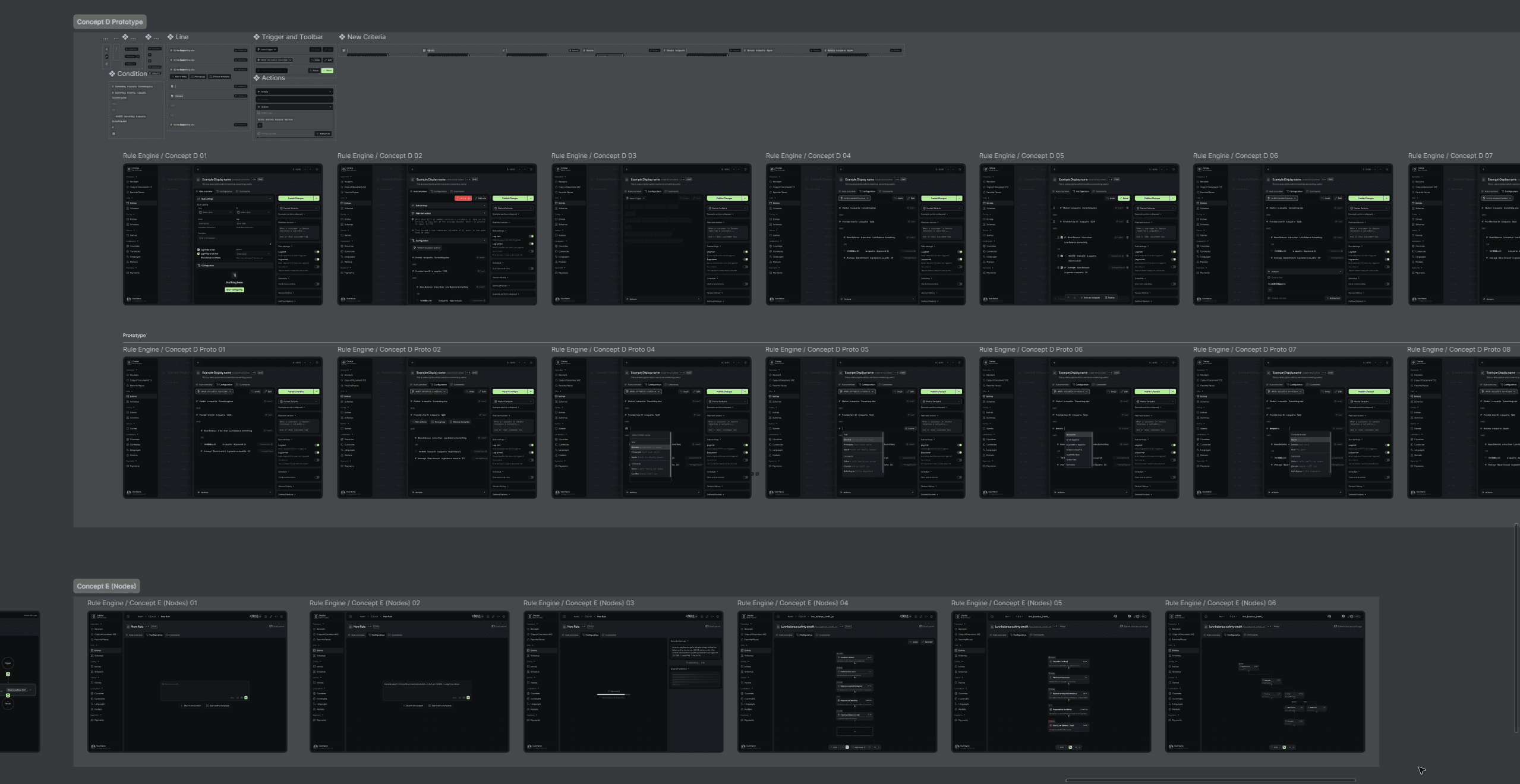
Design was developed directly within the frontend delivery process.
Embedded in the frontend team, I participated in daily standups and planning, working alongside engineers as features moved from concept through implementation.
We formed a dedicated design and engineering task group to align on patterns, documentation, and workflows. This included producing code-aware specifications, shared documentation, and automation-friendly design assets that reduced friction between design intent and implementation.
The approach prioritised alignment at the system level rather than handoff, ensuring design and code evolved together.
Results
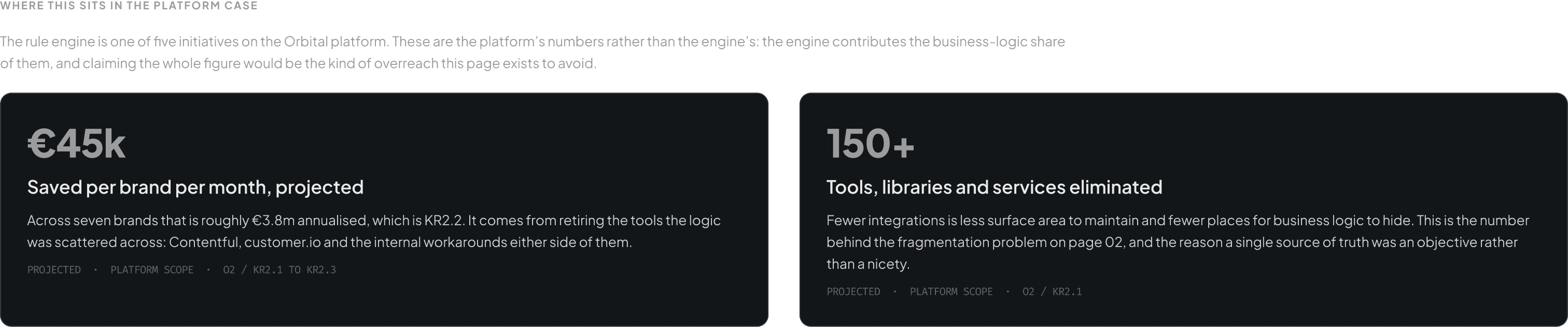
Orbital was deployed internally as a modular, scalable platform capable of supporting diverse use cases without fragmentation.
Design patterns and configuration models translated consistently into production, reducing rework and enabling teams to evolve the platform with confidence as complexity increased.